April 19, 1831
The Pale Blue EyeApril 19, 1831 frames both the opening of Augustus Landor’s last testament and its epilogue, binding the act of writing to the final hours he believes remain to him. The date’s decisive significance lies in that compressed interval: Landor records the past pressing into his present, completes and conceals his manuscript, then goes toward the river bluff where he intends to die. His final thoughts set the persistence of memory against uncertainty about what, if anything, follows death.
The Last Testament’s Present
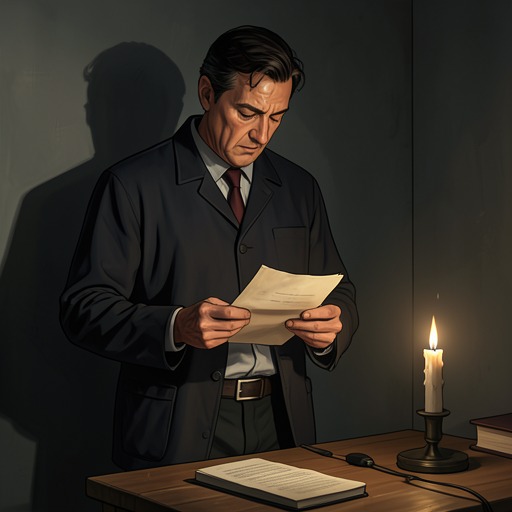
At the opening, Landor estimates that he has two or three hours left, revises that estimate to three, and allows at most four. The uncertainty is not about whether death is coming, but about its precise timing. He says that the knowledge gives ordinary details a new interest: his fingers, the lowest slat of a Venetian blind sitting askew, and a wisteria shoot snapped from its stem and moving outside the window. The bent blind and broken shoot are small observations, but the shoot’s resemblance to a gallows draws the prospect of death into the immediate view from his room.
The date makes the testament feel less like a later account of a settled past than a record written close to its ending. In the epilogue, still dated April 19, Landor declares that the work is done and that only judgment remains. He sets down his pen and describes what he will do next. The shared date joins the opening’s countdown to the epilogue’s final actions: the manuscript is finished within the same last-day frame in which Landor has already imagined his death as imminent.
The Past in the Room
As Landor writes, memory arrives with unusual immediacy. He describes the past as coming on with the force of the present, and pictures people from different parts of his life gathering in the house: an alderman by the hearth, his wife ladling ashes into a can, and his old Newfoundland retriever beside her. His mother appears down the hall, ironing his Sunday suit, although she never entered the house and died before he was twelve. The scene brings together the remembered, the dead, and the impossible without explaining how they coexist.
Landor calls these figures visitors and remarks that none speaks to the others; their silence follows an etiquette whose rules he cannot determine. In the epilogue he again greets figures in the room, this time naming Alderman Hunt and Claudius Foot, waving to his wife and scratching his Newfoundland behind the ears. The recurrence makes the visitors part of the testament’s closing frame, not merely a passing recollection. It also leaves their status unsettled: the writing presents them as figures Landor addresses, while offering no separate explanation of their presence.
The Manuscript and Its Reader
Completion does not mean immediate disclosure. Landor leaves the manuscript in the back of his desk drawer, behind a row of inkwells, where the first person to search would not find it. He expects discovery eventually, but only by someone with a more curious eye. The placement turns the testament into a deliberately hidden record: Landor finishes what can be written, yet leaves the work for a future reader to recover rather than presenting it openly.
That concealment sharpens the difference between finishing a story and securing its reception. Landor says that only judgment remains, but he cannot know who will find the pages or what judgment they will pass. The epilogue therefore closes his writing without closing its future. The manuscript is both a record of his last hours and an object whose eventual discovery depends on another person’s curiosity.
Spring, the Bluff, and the Uncertain End
Outside, the first warm weather of the year has arrived. Landor describes winter light yellowing with pollen, pink-flowering tulip trees, and robins in the meadow; he thinks it best to leave when the world is at its glory, because then the mind can be clear. The renewed season and his intended death occupy the same moment. Spring does not promise him a future: it supplies the setting in which he chooses to leave.
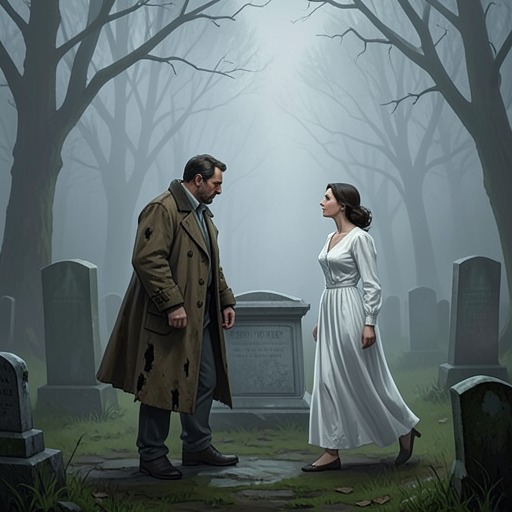
Landor follows the path he once took with Mattie and stands on the same bluff above the Hudson. He describes the river as freed of its winter crust and rushing from the north, then resolves to go over the height looking straight down, with his eyes open. The account establishes his intention to die by jumping, while keeping its outcome outside the written scene. His stated reason for doubt is spiritual: he does not share Mattie’s faith that she can fly into someone’s arms, and cannot know whether anyone will be waiting. Against the testament’s crowded room of remembered and imagined figures stands this final uncertainty. The people he sees are present in his writing, but their presence cannot assure him of an afterlife or of being remembered.